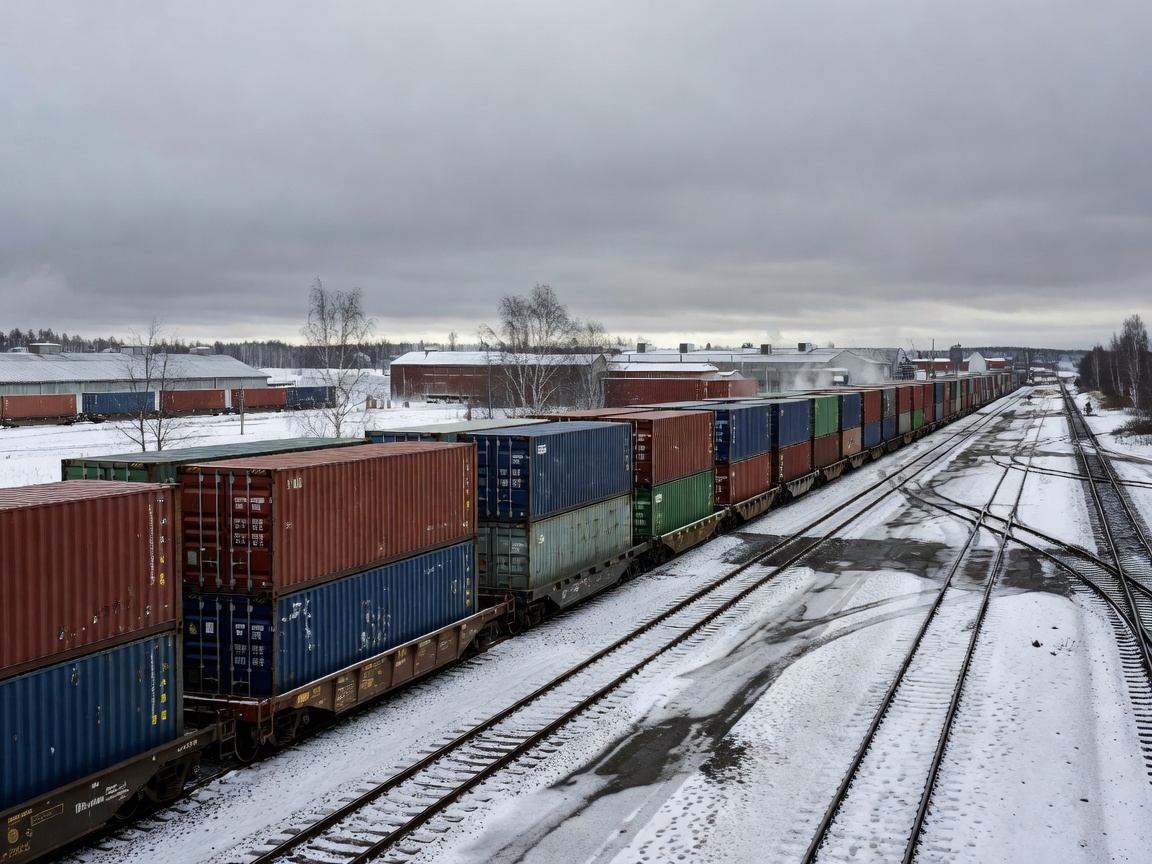
What a rail freight terminal connects
A rail freight terminal links rail infrastructure with cargo handling and, often, road transport. Intermodal terminals transfer standardized units between modes. Other freight yards may support different cargo or operating methods. The name of a site does not establish its capabilities, access rules or current service options; these require direct confirmation.
Terminal planning starts with the unit and the load. Check dimensions, weight, securing, lift points, packaging, equipment compatibility and any restrictions. Establish how cargo arrives at the terminal, how it is identified, where it waits and what event signals that it is ready for loading. The receiving end needs an equivalent plan, not an assumed mirror image.
Rail can be one part of a longer chain between coastal gateways, inland corridors, industrial locations and distribution facilities. A rail leg becomes useful when the terminals, route arrangements and road interfaces connect to the actual origin and destination.
Loading, unloading and yard flow
Loading operations depend on safe, compatible transfer equipment and a defined work sequence. The plan should state who supplies lifting or loading equipment, who directs the work, how the load is secured and what checks are recorded. Confirm site instructions before arrival; do not assume a general terminal has equipment for every unit or commodity.
Yard space separates arriving, staged, loaded and released cargo. Clear identification and status control reduce the risk of an incorrect unit being presented or collected. Decide how exceptions such as a damaged unit, mismatched reference or incomplete paperwork stop the process and who can authorize the next step.
At unloading, define receipt, condition inspection, storage and collection roles. The road carrier needs release information and suitable access. If a receiver cannot accept cargo at the planned point, specify whether temporary storage or a revised dispatch can be arranged, subject to actual facility terms.
Consolidation and terminal scheduling
Consolidation groups cargo to make a planned movement, while deconsolidation separates it for different receivers. Both create handling, data and control tasks. Confirm how units are built, sealed, identified, weighed where required and reconciled against shipment records. The consolidation plan needs a cut-off that aligns with the service arrangement, not a generic time assumption.
Terminal scheduling coordinates arrival, loading, rail departure, receipt and onward collection. Current schedules and route availability are not provided by this guide. Obtain shipment-specific information from relevant providers and keep a contingency for changed plans, missed connections or cargo not ready at the agreed point.
Storage can protect continuity between legs, but it has operational consequences: occupancy, condition control, stock visibility and release authorization. Keep storage decisions linked to the next confirmed movement.
Rail, road and maritime: general comparison
| Mode | General role | Key interface to plan |
|---|---|---|
| Rail | Inland freight movement and intermodal options | Terminal access, loading compatibility and onward delivery |
| Road | Flexible collection, direct connection and regional reach | Vehicle suitability, route access and delivery acceptance |
| Maritime | Vessel-based movement through coastal terminals | Vessel-to-land transfer, gate release and inland connection |
These broad roles do not establish relative price, capacity, speed or availability. A sound comparison considers the whole route, cargo characteristics, handoffs, operational control and confirmed service arrangements.
Advantages and limitations
Rail may support inland connectivity and intermodal transfer where the route and terminal network align with the cargo task. It can require more coordination around terminal handoffs than a direct road movement. Availability of a suitable terminal, loading method, route and onward collection must be verified before a plan is committed.
Road generally offers flexible point-to-point movement but still depends on access, vehicle selection, route conditions and receiving arrangements. Maritime cargo uses port terminals and a vessel interface, which may suit a coastal movement but still needs an inland link. Combining modes can extend network reach; each transfer adds a responsibility boundary to manage.
Operational checklist
- Confirm terminal type, cargo acceptance, access and equipment requirements.
- Specify unit dimensions, weight, securing method and cargo identification.
- Map loading, unloading, staging, custody and exception procedures.
- Coordinate arrival and release arrangements with all transport parties.
- Plan consolidation data, inventory control and any temporary storage.
- Verify current route and service information directly; never assume availability.
Use one transfer plan for both ends of the rail movement. The origin terminal, rail leg and destination terminal must agree on unit identity, status and release logic.
Key considerations
Rail planning is not complete when a line appears to connect two places. Cargo must reach a compatible terminal, be accepted and loaded, travel under an arranged service, then be received and distributed. Assess the chain as a whole and make each operational dependency explicit.